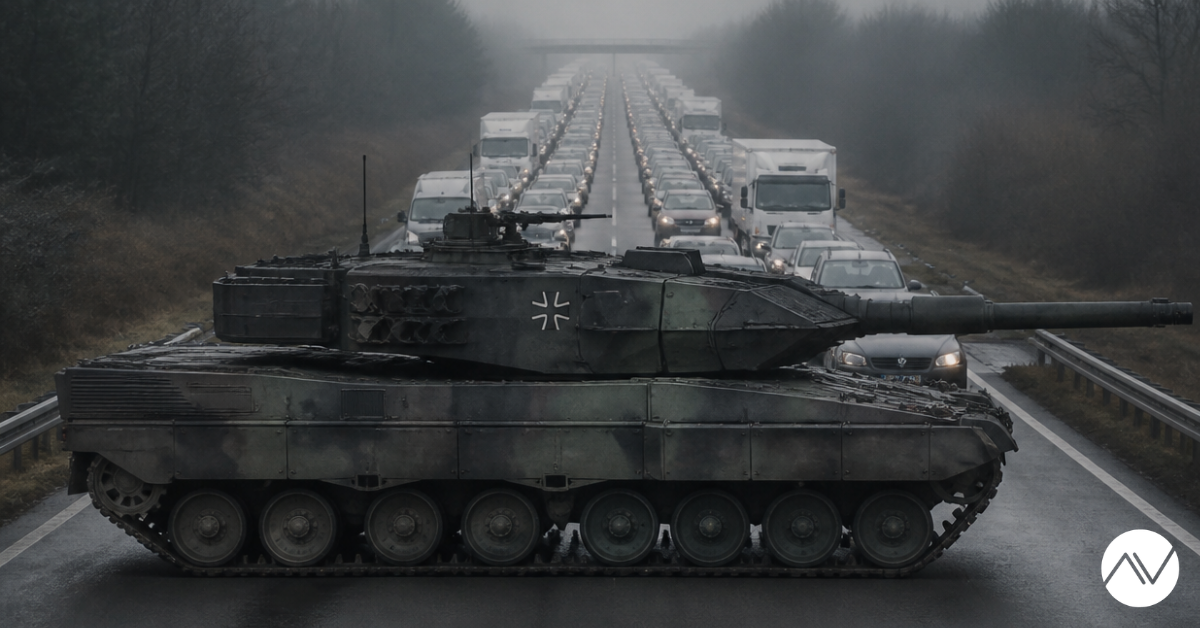
Defence hits a german wall
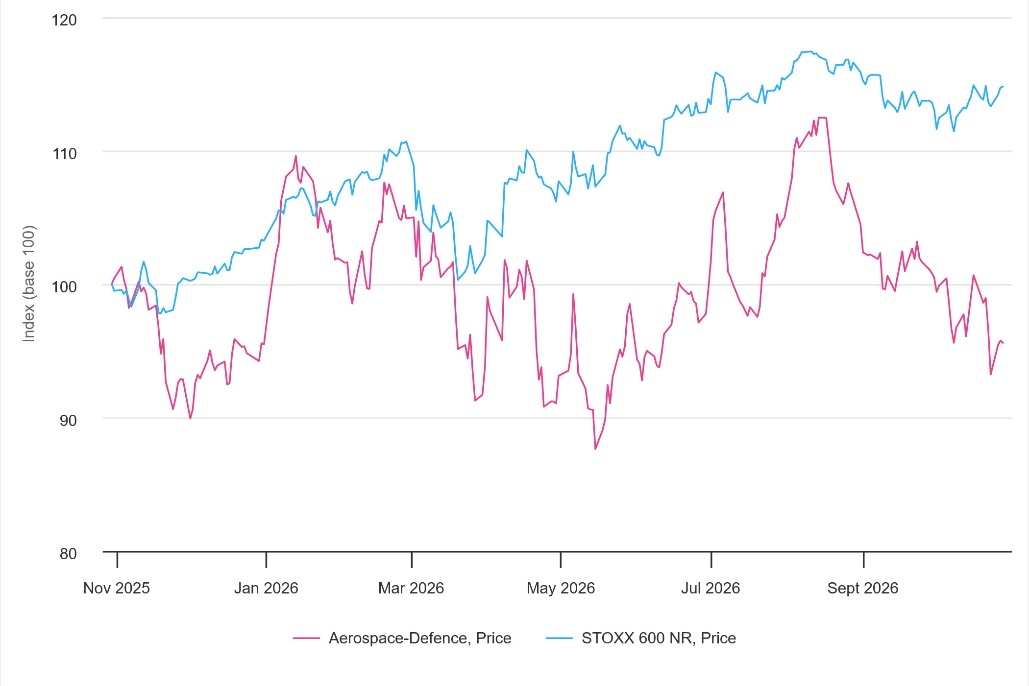
It took two years after Russia invaded Ukraine for European Aerospace & Defence (A&D) valuations to double, and two more for them to double again. Then came 2026, and the music stopped, admittedly at a lofty altitude. The sector has gone nowhere year to date, yet still trades on a cool 26.6x 2026 earnings. Hermès, for reference, trades on 28x. Tanks, it seems, are the new handbags.
Flying without formation: European A&D
We have said it before and will say it again: the easy money from refilling ammunition depots has been made. The sector now faces Ukrainian and Turkish rivals in sophisticated missile systems, while the Trump administration has thrown open the gates of US procurement to nimble newcomers, a rude awakening for the Lockheed Martins of this world, which struggled to ramp up production of dated kit.
Europe, meanwhile, has missed its chance to agree on joint programmes quickly and with an eye on cost, the only way to take on Turkish and renewed American competition. Rheinmetall's outspoken Armin Papperger has proved remarkably effective at torpedoing pan-European projects on spurious grounds, the common thread being a German say, and preferably the final say, in every cross-border initiative.
Five years into the war, and with more than €500bn a year spent on defence, Europe has little to show for it. France and Germany cannot even agree on a modern tank or a next-generation fighter jet; political backing at the very top has failed to shift entrenched positions on either side. Taxpayers have every right to be upset. Shareholders, for their part, are realising they were sold a story: European A&D remains an inefficient sum of hopefuls.
Space defence tells the same tale. Here Europe looks positively foolish, with Germany striking out on its own from a standing start, a near-certain route to nowhere, while Airbus-Thales-Leonardo are trying to bring together their established know-how.
As things stand, Europe has two armies fit for purpose, Ukraine and Poland; two competent but overstretched ones fighting on too many fronts, France and the UK; and assorted pockets of competence under Nato command, which is to say at the mercy of Washington's willingness to play ball.
Nothing coming out of listed A&D groups suggests this is about to change.
The lesson of the past five years is that we were too optimistic about a surge in demand for European kit. Nato, Trump's meddling and national egos put paid to that.
With so little to show for it, the sector is too expensive. Investors should cut exposure, and sharply, though Airbus remains a must-own, as it looks set to ride its airliner duopoly for a while yet.
Demanding A&D valuations: not worth the wait
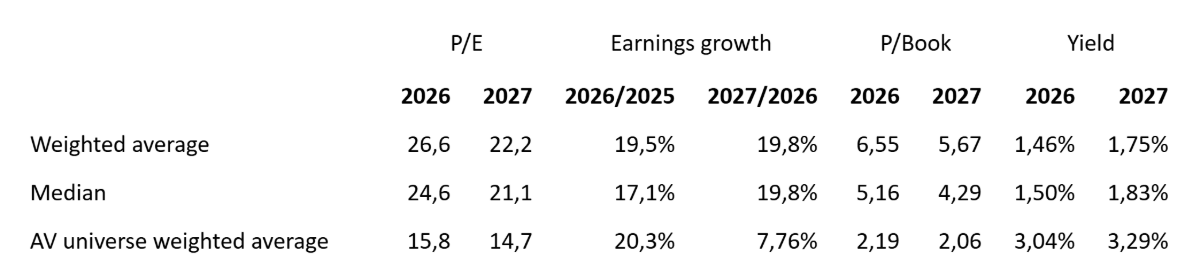
Demanding A&D valuations: not worth the wait
Subscribe to our blog


Microsoft is paying a third of its workforce to leave - and if Europe follows, the earnings boost comes...

AlphaValue's Active List is outperforming by over 10% year-to-date, its best level in 13 years, ...